


Product Details
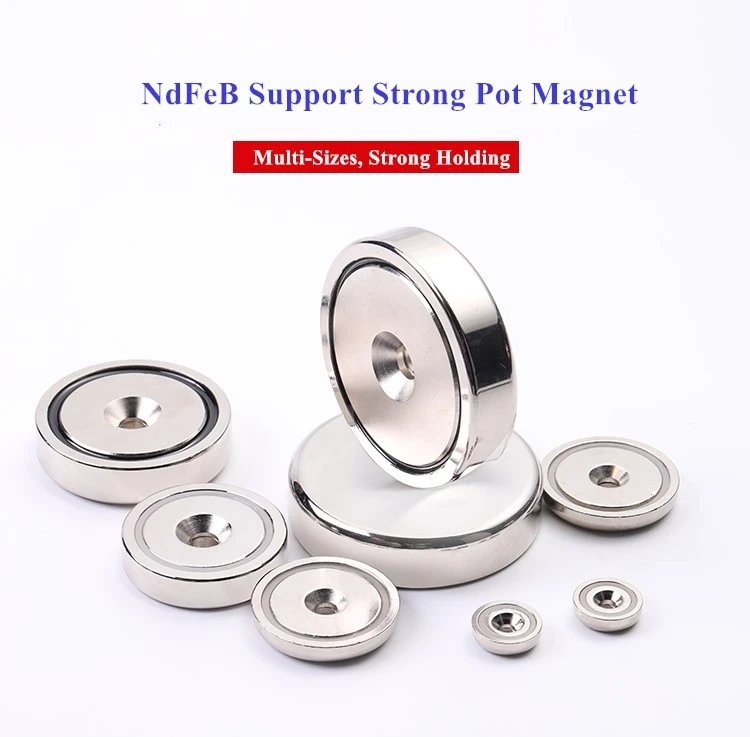
Standard carbon steel pot magnets rust quickly in wet, salty, or acidic environments. That's where stainless pot magnets prove their value. By replacing the ordinary steel cup with 304 or 316 stainless steel, these magnets withstand high humidity, salt spray, and regular washdowns without red rust bleeding onto your product or equipment. For example, a 50mm stainless pot magnet with 316 cup and N42 neodymium delivers 75 kg pull force while surviving 500+ hours in salt spray test (ASTM B117) – impossible for regular plated pots. Common users: food conveyor belts (hygiene), dock latches (saltwater), chemical mixing tanks (acid resistance), and outdoor digital signage (UV rain). Our stainless pot magnets are laser‑welded shut, preventing liquid ingress into the magnet cavity. No epoxy degradation, no swelling, no contamination risk.
Technical Specifications – Stainless Series
| Type | Cup Material | Magnet Core | Pull Force (kg on 10mm steel) | Salt Spray Resistance | Typical Application |
|---|---|---|---|---|---|
| 32mm pot, countersunk | 304 stainless | NdFeB N45 | 40 | 200h | Food conveyor side guides |
| 50mm pot, stud mount | 316 stainless | NdFeB N48 | 110 | 500h | Marine hatch latch |
| 65mm pot, rubber boot | 304 stainless | Ferrite Y35 | 18 | 300h | Pharma cleanroom holder |
| 80mm pot, blind hole | 316L stainless | NdFeB N50 | 180 | 600h | Chemical tank magnetic mixer |

Key Advantages – Stainless vs. Carbon Steel Pot Magnets

- Zero rust – no staining of food products or cleanroom surfaces
- Laser‑welded cup – fully hermetic seal, IP67 rated for underwater use up to 1 meter
- 316 stainless version resists chlorides (swimming pools, seawater) and most acids (pH 4–10)
- Easy to sanitize – smooth cup surface, no crevices for bacteria growth
- Non‑magnetic cup body (austenitic stainless) does not short‑circuit the magnetic field – same pull force as carbon steel pots
Applications Where Stainless Pot Magnets Excel
- Food & beverage processing – holding stainless steel covers on mixers, magnetic traps for metal debris (hygienic design).
- Marine & offshore – magnetic dock fenders, hatch holders, ROV release mechanisms (no rust after 2 years).
- Pharmaceutical & cleanrooms – mounting brackets for equipment that require frequent washdown with disinfectants.
- Outdoor signage & solar – permanent mounting on steel poles, no paint chipping or rust streaks.
A Norwegian seafood processing plant replaced 200 carbon steel pot magnets with our stainless pot magnets (304 series). After 14 months in a humid, salty environment, all units remained rust‑free and maintained ≥95% of original pull force. The previous magnets had failed within 6 months.
Why Source Stainless Pot Magnets From Us
- 30 years in magnetic assemblies – we understand austenitic stainless properties (non‑magnetic cup doesn't weaken the magnet).
- In‑house laser welding – precise, narrow heat‑affected zone, no warping of thin cups (0.8mm–2.0mm).
- Passivation treatment after welding – removes iron contamination, restores corrosion resistance.
- Full traceability of stainless coils (mill certificates available for 304/316L).
- Sample lead time: 10 days for standard diameters with stainless cup.
Packaging & Shipping
Each stainless pot magnet is individually bagged with a silica gel pack to prevent any condensation during sea freight. For food‑grade orders, we use FDA‑compliant polyethylene bags and cleanroom‑grade cartons. All shipments include a material test report (MTR) for the stainless steel batch and a pull force certificate. We ship via air (for urgent samples) or sea (FOB Ningbo). For EU customers, we provide full REACH and RoHS declarations.

After-Sales & Warranty
3‑year warranty against rust or pitting on stainless cup (provided the magnet is not mechanically damaged). 2‑year warranty on magnetic pull force (≥80% of rated value). Free replacement for any unit showing weld seam leakage. Technical support available within 24 hours, including video inspection of returned products.
FAQ – Stainless Pot Magnets
Q: Are stainless pot magnets as strong as carbon steel ones?
A: Nearly identical – austenitic stainless is non‑magnetic, so it does not steal flux from the working face. Our 316 stainless pot achieves 97–100% of the pull force of a same‑size carbon steel pot. The slight difference comes from lower magnetic permeability of stainless vs. low‑carbon steel, but we compensate with tighter air gaps.
Q: Can you make a stainless pot magnet with a countersunk hole?
A: Yes – we can machine a countersunk hole through the stainless cup, but the screw will be exposed to the environment. For fully sealed applications, we recommend a blind hole or a stud mount. We also offer a stainless screw included.
Q: What is the maximum operating temperature for stainless pot magnets?
A: For NdFeB core: 80°C standard, 150°C with high‑temp grade. For ferrite core: up to 250°C. The stainless cup itself handles up to 400°C without deformation, but the magnet inside will lose strength first.
Production Process – Stainless Pot Magnets
- Deep drawing of stainless cup (304 or 316L) from certified coils
- CNC trimming and deburring (no iron tools to avoid contamination)
- Laser welding of the cup seam (if two‑piece design) – 100% leak test
- Passivation in nitric acid bath (20 min at 50°C)
- Insertion of magnet (NdFeB or ferrite) and epoxy filling under vacuum
- Curing and final sealing with a stainless cap (laser welded shut)
- Pull force test and salt spray sample testing (per batch)
- Cleanroom packing with desiccant
Certifications

Hot Tags: stainless pot magnets, China stainless pot magnets manufacturers, suppliers, factory


